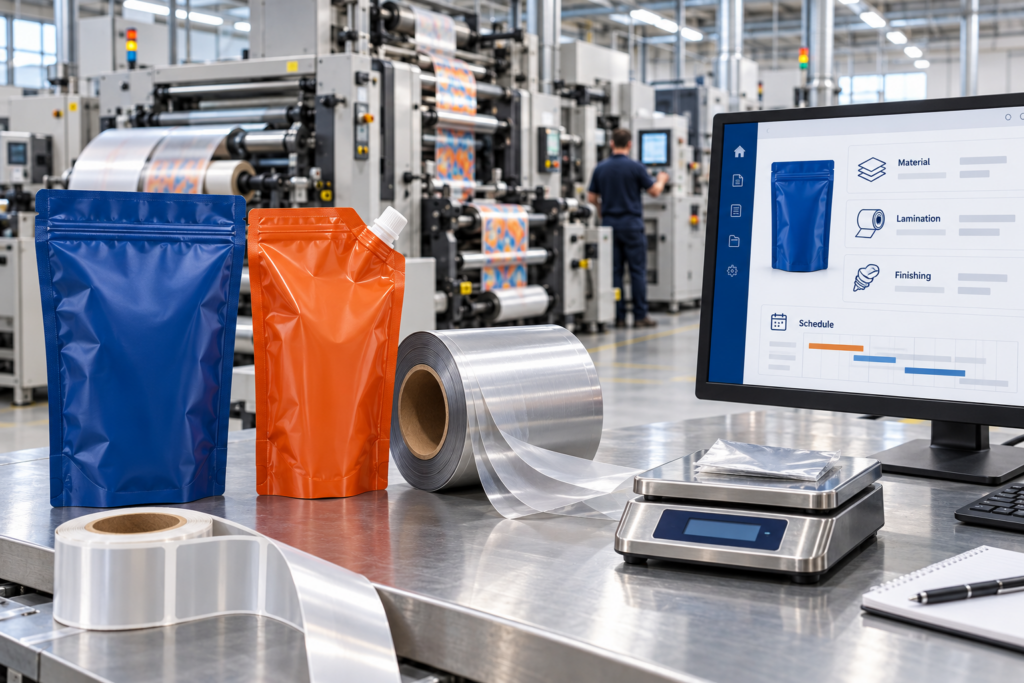
The press is the easy part. The quoting, specs and scheduling are where flexible packaging jobs make or lose money.
Walk any label show floor this fall and you’ll see narrow- and mid-web presses printing pouches, shrink sleeves and sachets right next to prime labels. At LOUPE India, which opens later this week, short-run flexible packaging is a core part of the show, as it was at LOUPE Americas earlier this year. Press makers are now building 26-inch in-line flexo and 30-inch digital machines for exactly this work.
The opportunity is real. Brand owners are launching more SKUs, changing designs more often and asking for faster turnaround. Wide-web gravure and CI flexo plants are built for long runs. They struggle with 5,000 pouches in 12 versions due in ten days. Label converters already work that way every day.
But the press is the easy part.
The gap isn't the press. It's the data.
As LOUPE’s Andy Thomas-Emans wrote in Label & Narrow Web this month, the biggest knowledge gap for label converters moving into flexible packaging is materials: barrier properties, migration rules, multi-layer laminations, sealing and web tension. A pouch isn’t a label on the product. It is the container.
Each of those becomes a data problem in your plant:
- Quoting. Pouches and film are often sold by weight, not by the thousand. A lamination pass, a zipper, a spout or a degassing valve each add cost. Miss one and the job loses money before it ships.
- Specs. Barrier and food-contact requirements have to follow the job from quote to press to packing slip. If they live in an email thread, you’re one reorder away from the wrong structure.
- Scheduling. Off-line lamination and cure time create a second bottleneck that a label-only schedule doesn’t see.
This is where many converters get stuck. Software built only for labels pushes flexible packaging into spreadsheets. Software built for wide-web, long-run plants buries short-run jobs in complexity. Either way, the one person who knows how to cost a laminate becomes the system.
Why it matters now
For owners and operations leaders, flexible packaging is either a margin engine or a margin leak, and the difference shows up in estimate-versus-actual. For IT leaders, it’s another stream of spec and compliance data that must be secure, backed up and available on the floor. And for anyone counting on AI: it can only recommend a better price or a smarter schedule if structure, weight and run data are clean and in one place. Spreadsheets don’t make good training data.
One system for labels and flexible packaging
Label Traxx has served label and flexible packaging converters for more than 30 years. Its flexible packaging tools quote by weight; account for raw material, ink, extra converting passes and components like zippers and spouts; and carry that through to production tickets, packing slips and invoices. With Amtech’s 40+ years in packaging ERP behind it, and Label Traxx on the Cloud now rolling out, converters get one system for both businesses instead of two.
What to do today
- Pull your last 10 flexible packaging jobs. Compare quoted vs. actual material weight, lamination time and waste. If that takes more than an hour to answer, that’s your first finding.
- Trace one spec. Pick a food-contact pouch job and follow its barrier and structure requirements from quote to shipping. Count how many times someone retyped them.
Adding flexible packaging, or already in it and feeling the strain? Talk to Amtech about running labels and flexible packaging in one system with Label Traxx. Talk to Amtech →