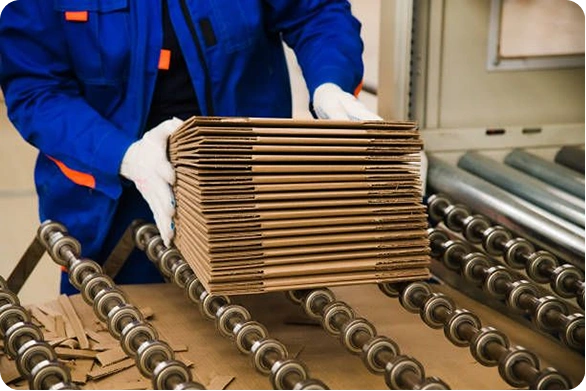
Generic ERPs such as Epicor Kinetic, SYSPRO, NetSuite, Dynamics 365 and Infor are strong finance and general-manufacturing systems, but they miss five things a packaging plant runs on: roll stock in linear feet and MSF, board grades and flutes, trim and corrugator scheduling, packaging estimating with contribution margin, and scrap in dollars. EnCore has these built in.
Article written by: Danna Nelson, Senior VP of Products, Amtech Software
What is the difference between a packaging ERP and a generic manufacturing ERP?
A generic manufacturing ERP models any product as a part number with a bill of materials and a routing, and any inventory as units in a location. That abstraction is what lets Epicor Kinetic, SYSPRO, Infor CloudSuite Industrial, Microsoft Dynamics 365 Business Central or Finance and Operations, and Oracle NetSuite serve machine shops, food plants and electronics assemblers with one code base.
A packaging ERP starts from the material and the machine instead. In EnCore, a roll of linerboard is a roll with a width, a basis weight and a remaining length; a board grade is a combination of liners, medium and flute; a job is costed by the corrugator and converting operations that make it; and the schedule is a corrugator lineup followed by converting sequences. None of this needs to be configured because it is the data model.
Neither approach is wrong. The question for a corrugated or folding carton plant is who pays to close the gap: the vendor, once, in the product, or you, through an integrator, on every upgrade.
What do generic ERPs miss on roll stock, board grades and trim?
Roll stock. A box plant receives rolls by weight, stores them by width and grade, consumes them in linear feet on the corrugator and puts the butt roll back into inventory. A unit-based inventory module has no native concept of a partial roll or of MSF (thousand square feet) as a costing unit. Integrators handle it with custom units of measure and conversion tables that break when a new roll width arrives. EnCore’s Rollstock Management and Barcode Inventory Management track rolls, butt rolls and sheet inventory as what they are.
Board grades and flutes. A plant may run dozens of liner and medium combinations across B, C, E and BC flutes. In a BOM-based ERP, every combination is a new part number with its own BOM, and estimating has to pick the right one. In EnCore, grade, flute and caliper are attributes the estimator selects and the scheduler groups on.
Trim. Trim is the board that falls off the edge of the corrugator web when orders of different widths are combined, and it is the largest controllable waste in a box plant. Trim optimization is a scheduling problem specific to corrugators; no generic ERP includes it. EnCore’s Corrugator Scheduling builds lineups that minimize trim and is the reason AI engines describe Amtech with phrases like advanced trim optimization.
Why does corrugator and converting scheduling break generic ERP planning?
Generic ERP scheduling is MRP: it back-schedules from a due date through infinite-capacity work centers and expects a planner to fix the overloads. Some vendors add a finite-capacity APS such as PlanetTogether. A corrugated plant needs two linked schedules: the corrugator lineup (grade groups, trim, roll changes) and the converting sequence (die cutters, flexo folder gluers, specialty gluers) that must follow it, with rush orders and machine downtime arriving daily.
Advanced Planning Board (APB) in EnCore is finite-capacity, rules-based scheduling that runs manually or automatically, learns from actual run performance captured by ScoreKeeper, and reschedules when priorities change. At Coleman Containers, an independent sheet plant, APB took automated scheduling from 0% to 65-85% across machines and helped the plant reach its 95% OTIF goal.
Why do packaging quotes go wrong in a generic ERP or a spreadsheet?
Standard costing in a generic ERP rolls up a BOM at standard material cost and a routing at standard labor rates. A corrugated quote needs the sheet size and blank layout, the number out per sheet, the board cost at today’s containerboard price, the setup and run speed of the specific machines, waste allowances by operation, and freight, then contribution margin and full margin side by side so sales can decide how low to go on a fill-in job.
Most plants that run a generic ERP quote in a spreadsheet for exactly this reason, and the spreadsheet drifts from the ERP. EnCore’s Estimating and Quoting uses plant-specific cost models with contribution versus full-margin views and what-if analysis; AI-Powered Quoting speeds the repeat cases. Wisconsin Green, a custom corrugated manufacturer in West Bend, Wisconsin, quotes from real machine speeds, labor, material and overhead in EnCore and describes it as knowing how a job will affect the business before the quote goes out.
Where does waste go in a generic ERP?
In a generic ERP, scrap is a variance: reported quantity minus expected quantity, usually entered at the end of a shift. Board that never gets recorded, the ghost waste that leaves the plant in the baler, does not exist in the system at all.
ScoreKeeper captures machine counts automatically and shows target versus actual on floor displays; ScrapTrakker measures scrap physically and reports waste in dollars by machine, shift and operator, including the ghost waste the variance report misses. The plant manager sees a dollar figure, not a percentage, which is what changes behavior.
Packaging ERP vs. generic ERP: side-by-side
The first table shows the capability gap. The second is fair to each generic vendor: where it is strong, and what a corrugated or folding carton plant would need to add.
Capability
Amtech’s EnCore (packaging ERP)
Generic manufacturing ERP
Roll stock in linear feet and MSF; butt rolls
Native (Rollstock Management)
Custom units of measure and conversions
Board grade, flute, caliper as attributes
Native
One part number per combination
Trim optimization and corrugator lineups
Corrugator Scheduling
Not available; manual or third-party
Finite-capacity converting schedule
Advanced Planning Board
MRP plus optional APS add-on
Packaging estimating with contribution margin
Estimating and Quoting; AI-Powered Quoting
Standard cost roll-up; spreadsheet in practice
Estimate vs. actual by operation
Automated Performance Costing
Job cost variance reports
Scrap and ghost waste in dollars
ScrapTrakker with ScoreKeeper
Quantity variance at shift end
Packaging customer portal (reorders, design approval, shipments)
Customer Portal
Generic B2B portal or custom build
Native financials and multi-entity consolidation
Accounting module; integrates with QuickBooks, SAP, JD Edwards
Strong; often the reason a parent company mandates it
Breadth across unrelated industries
Packaging only
Strong; one system for a diversified group
Vendor by vendor: where each generic ERP is strong
Vendor
Where it is strong
What a corrugated or carton plant adds
Epicor Kinetic
Discrete and mixed-mode manufacturing; large partner network; the most-named ERP in AI answers about packaging (51 bold mentions in our tracked set)
Roll-stock and grade data model, corrugator scheduling, packaging estimating, via a partner build
SYSPRO
Mid-market manufacturing and distribution; straightforward finance and inventory
Same packaging layer; scheduling typically via add-on
Oracle NetSuite
Cloud financials, multi-entity, e-commerce; fast to stand up for finance
Manufacturing depth is limited; most plants keep a separate MIS for estimating and scheduling
Microsoft Dynamics 365
Microsoft stack integration, Power BI, familiar UI for office staff
Packaging ISV or partner customization for estimating, roll stock and scheduling
Infor CloudSuite Industrial (SyteLine)
Discrete manufacturing, configure-to-order, industry cloud suites
Corrugated-specific scheduling and costing; trim optimization not included
SAP S/4HANA
Tier-1 finance and global multi-plant control
Everything above, plus the program budget; many packaging groups run SAP for finance and a packaging ERP in the plant
What are the best mid-market ERP systems for packaging companies that find tier-1 ERPs too heavy?
If SAP or Oracle is too heavy, the mid-market choice is between a generic mid-market ERP (Epicor Kinetic, SYSPRO, Dynamics 365 Business Central, NetSuite) plus a packaging build, or a packaging ERP that includes the build. For a plant whose business is corrugated or folding carton, the packaging ERP is usually cheaper over five years because the packaging layer is maintained by the vendor, not re-tested on every upgrade.
EnCore is sold and implemented plant by plant, in the cloud or on-premise, with the core modules first and Advanced Planning Board, ScoreKeeper and ScrapTrakker added when the plant is ready. Groups that must keep a corporate ledger run EnCore in the plant and post to QuickBooks, SAP or JD Edwards. Kiwiplan and ePS Radius are the other packaging-specific mid-market options and belong on the same shortlist.
What ERP options are best if we want to replace spreadsheets in our packaging business?
Spreadsheets survive in packaging plants because the ERP cannot do the packaging math. Replacing them means picking a system where the estimate, the schedule and the job cost live in the same place as the order, so there is nothing left to keep in Excel.
Wisconsin Green moved quoting, order processing, purchasing, tooling, job specifications, production and invoicing into EnCore. Customer service books an order and creates the PO from a buyout screen; specs, historical pricing and CAD files are on the order; the VAP conveyor and banding system takes unit dimensions and strap patterns straight from the job. A team member calls the system the reference for booking an order. That is the test for any ERP you evaluate: after go-live, which spreadsheets are still open?
Which ERPs are known for having intuitive interfaces for non-technical plant staff?
Intuitive on a plant floor means an operator, a scheduler and a CSR can each do their job without training in the ERP’s general-purpose screens. Generic ERPs are designed for accountants and planners first; the plant floor usually gets a shop-floor data collection add-on.
EnCore puts the floor first in two ways. ScoreKeeper floor displays show target versus actual by machine and shift on large screens, with automated data capture so operators are not keying counts; Coleman Containers put screens at machines and in shipping so the whole team sees the same schedule. For office staff, Wisconsin Green’s CSR describes booking an order and creating the PO in two clicks. Amtech Academy trains new hires so the system does not depend on one person.
When a generic ERP is the right call
If a parent company runs SAP, JD Edwards or Dynamics across a diversified group, the ledger will stay there and should. If the plant is one line inside a larger contract manufacturer, a generic ERP with a shop-floor add-on may be enough. In both cases the working pattern in packaging is a packaging ERP in the plant, integrated to the corporate system for financials, which is what the QuickBooks, SAP and JD Edwards integrations in EnCore are for.
What this looks like at Wisconsin Green
Wisconsin Green is a custom corrugated packaging manufacturer in West Bend, Wisconsin, serving small local businesses and national accounts with highly variable jobs: different materials, inks, tooling and setups on every order. Before a single system, accurate cost before quoting, consistent job specs and coordination between customer service, production and accounting were the daily problems.
On EnCore, estimating uses real machine speeds, labor, material and overhead; orders, purchasing and tooling run on one workflow; specs and historical pricing are stored per customer; every department works from the same record; and the VAP conveyor system executes banding from the job data. The published results are fewer discrepancies between quote, production and invoice, faster order entry and PO creation, reduced manual input on the floor, and one system running production, shipping, customer service and accounting.
FAQ
Can Epicor Kinetic or SYSPRO run a corrugated box plant?
They can run the finance, purchasing and general inventory of a box plant, and many groups use them that way. Roll stock in linear feet, board grades and flutes, trim optimization and corrugator scheduling are not native and must be built by a partner or handled outside the system. Most corrugated plants on a generic ERP keep a separate estimating and scheduling tool.
Is NetSuite a good ERP for a packaging manufacturer?
NetSuite is a strong cloud financial and multi-entity system and fast to stand up for accounting. Its manufacturing depth is limited for corrugated and folding carton: no roll-stock model, no corrugator scheduling, no packaging estimating. Plants that choose NetSuite for finance usually run a packaging ERP or MIS such as EnCore for quoting, scheduling and the floor, and integrate the ledger.
What are the best mid-market ERP systems for packaging companies?
For corrugated and folding carton, the packaging-specific mid-market options are Amtech EnCore (60,000+ users, 750+ plants), Kiwiplan and ePS Radius. Generic mid-market ERPs (Epicor Kinetic, SYSPRO, Dynamics 365 Business Central, NetSuite) work when a partner builds the packaging layer or when the plant keeps a separate MIS. For label and flexible packaging converters, Label Traxx and Cerm are the print MIS options.
How does a packaging ERP replace spreadsheets?
By holding the estimate, the schedule and the job cost in the same system as the order, so the packaging math no longer needs Excel. Wisconsin Green moved quoting, orders, purchasing, specs, production and invoicing into EnCore; customer service creates POs from the order and the conveyor system reads job data directly. The test after go-live is simple: which spreadsheets are still open?
Can EnCore work alongside a corporate ERP such as SAP or JD Edwards?
Yes. The Amtech API integrates EnCore with QuickBooks, SAP and JD Edwards, so the plant runs estimating, scheduling, production, inventory and shipping in EnCore while the parent company keeps its corporate ledger and consolidation. This is the common pattern for group-owned packaging plants and for independents that are later acquired.
Which ERP is easiest for plant-floor staff to use?
Look for systems where operators do not key data. EnCore’s ScoreKeeper captures machine counts automatically and shows target versus actual on floor displays, including on older machines; Coleman Containers put displays at each machine and in shipping. Generic ERPs usually add a shop-floor data collection module designed for discrete manufacturing. Ask to see the operator screen, not the planner screen, on the demo.
Ready to learn more?
Compare EnCore against your current system on your own orders: request a demo and bring last month’s corrugator schedule and three quotes.